February 14, 2021

Principles by Ray Dalio

 Principles by Ray Dalio


1) WHAT ARE PRINCIPLES?

Your values are what you consider important, literally what you value. Principles are what allow you to live a life consistent with those values. Principles connect your values to your actions; they are beacons that guide your actions and help you successfully deal with the laws of reality. It is to your principles that you turn when you face hard choices.


2) WHY ARE PRINCIPLES IMPORTANT?

All successful people operate by principles that help them be successful. Without principles, you would be forced to react to circumstances that come at you without considering what you value most and how to make choices to get what you want.


3) WHERE DO PRINCIPLES COME FROM?

Sometimes we forge our own principles and sometimes we accept others’ principles, or holistic packages of principles, such as religion and legal systems. 


4) DO YOU HAVE PRINCIPLES THAT YOU LIVE YOUR LIFE BY? WHAT ARE THEY?

Your principles will determine your standards of behavior. When you enter into relationships with other people, your and their principles will determine how you interact.


Through this time and till now I followed the same basic approach I used as a 12-year-old caddie trying to beat the market, i.e., by 1) working for what I wanted, not for what others wanted me to do; 2) coming up with the best independent opinions I could muster to move toward my goals; 3) stress- testing my opinions by having the smartest people I could find challenge them so I could find out where I was wrong; 4) being wary about overconfidence, and good at not knowing; and 5) wrestling with reality, experiencing the results of my decisions, and reflecting on what I did to produce them so that I could improve.


This brings me to my most fundamental principle:

Truth  —more precisely, an accurate understanding of reality— is the essential foundation for producing good outcomes.


It is only natural that seeking something new, or seeking new depths of something old, is required to bring us satisfaction.

In other words, the sequence of

1) seeking new things (goals);

2) working and learning in the process of pursuing these goals;

3) obtaining these goals, and

4) then doing this over and over again is the personal evolutionary process that fulfills most of us and moves society forward.


The most important quality that differentiates successful people from unsuccessful people is our capacity to learn and adapt to these things.


  1. It is a fundamental law of nature that to evolve one has to push one’s limits, which is painful, in order to gain strength—whether it’s in the form of lifting weights, facing problems head-on, or in any other way


Most people react to pain badly. They have fight or flight reactions to it: they either strike out at whatever brought them the pain or they try to run away from it. As a result, they don’t learn to find ways around their barriers, so they encounter them over and over again and make little or no progress toward what they want


Most learning comes from making mistakes, reflecting on the causes of the mistakes, and learning what to do differently in the future.


Pain + Reflection = Progress


people who know that understanding what is real is the first step toward optimally dealing with it make better decisions.


People who overweigh the first-order consequences of their decisions and ignore the effects that the second-and subsequent-order consequences will have on their goals rarely reach their goals

Successful people understand that bad things come at everyone and that it is their responsibility to make their lives what they want them to be by successfully dealing with whatever challenges they face


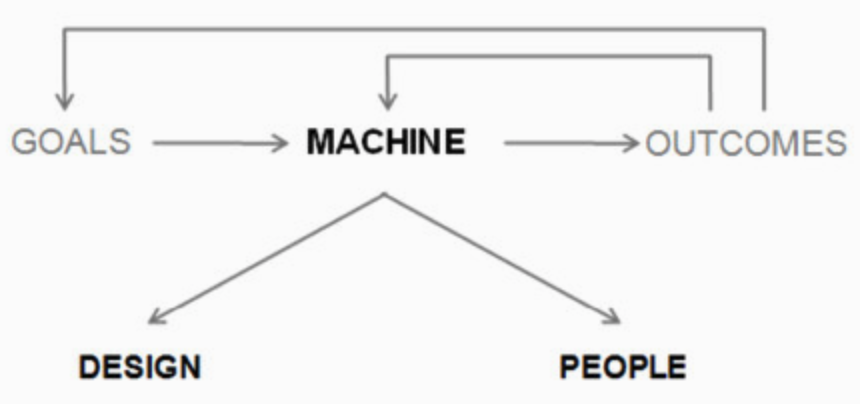
That schematic is meant to convey that your goals will determine the machine that you create to achieve them; Your machine will consist of the design and people you choose to achieve the goals.


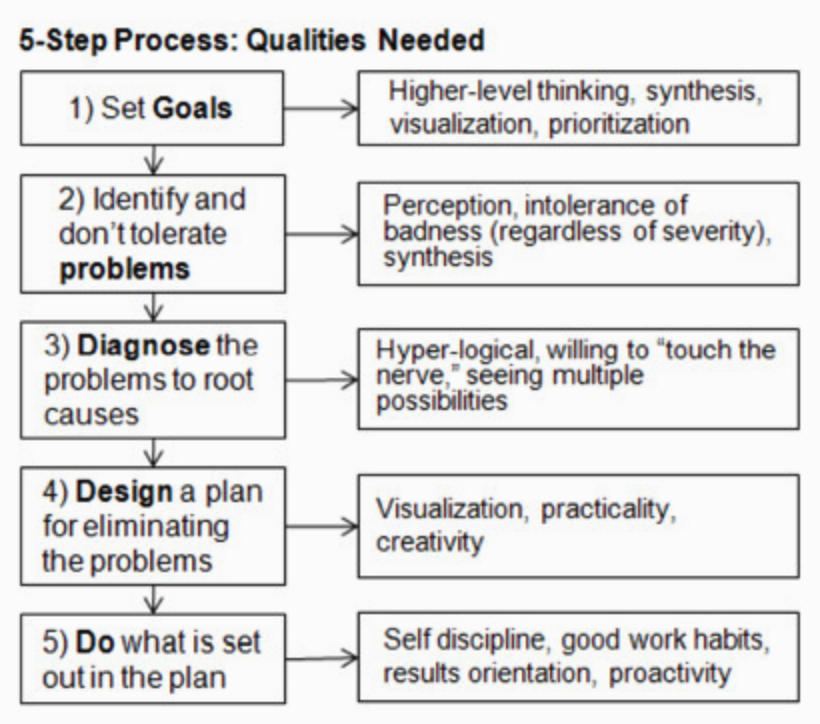
MY 5-STEP PROCESS TO GETTING WHAT YOU[40]  WANT OUT OF LIFE


  1. Have clear goals.

  2. Identify and don’t tolerate the problems that stand in the way of achieving your goals.

  3. Accurately diagnose these problems.

  4. Design plans that explicitly lay out tasks that will get you around your problems and on to your goals.

  5. Implement these plans—i.e., do these tasks.


  • You must approach these as distinct steps rather than blur them together.

  • Each of these five steps requires different talents and disciplines

  • It is essential to approach this process in a very clear-headed, rational way rather than emotionally.


By and large, life will give you what you deserve and it doesn’t give a damn what you like. So it is up to you to take full responsibility to connect what you want with what you need to do to get it, and then to do those things—which often are difficult but produce good results—so that you’ll then deserve to get what you want.


  1. Setting Goals

  • You can have virtually anything you want, but you can’t have everything you want.
  • Avoid setting goals based on what you think you can achieve.
  • Achieving your goals isn’t just about moving forward.

2. IDENTIFYING AND NOT TOLERATING PROBLEMS


Most problems are potential improvements screaming at you. In order to be successful, you have to

1) perceive problems and

2) not tolerate them.


Remember that identifying problems is like finding gems embedded in puzzles; if you solve the puzzles you will get the gems that will make your life much better.

  • Be very precise in specifying your problems.
  • Don’t confuse problems with causes.


3) DIAGNOSING THE PROBLEMS

  • You will be much more effective if you focus on diagnosis and design rather than jumping to solutions.
  • You must be calm and logical.
  • You must get at the root causes.
  • Recognizing and learning from one’s mistakes and the mistakes of others who affect outcomes is critical to eliminating problems.
  • Pain + Reflection = Progress

So to be successful, you must be willing to look at your own behavior and the behavior of others as possible causes of problems.


The most important qualities for successfully diagnosing problems are logic, the ability to see multiple possibilities, and the willingness to touch people’s nerves to overcome the ego barriers that stand in the way of truth.


4) DESIGNING THE PLAN (DETERMINING THE SOLUTIONS)


Creating a design is like writing a movie script in that you visualize who will do what through time in order to achieve the goal. The design will give you your to-do list (i.e., the tasks).


5) DOING THE TASKS

They tend to be self-disciplined and proactive rather than reactive to the blizzard of daily tasks that can divert them from execution. They are results-oriented: they love to push themselves over the finish line to achieve the goal.


Values → 1) Goals → 2) Problems → 3) Diagnoses → 4) Designs → 5) Tasks


As you design and implement your plan to achieve your goals, you may find it helpful to consider that:

Life is like a game where you seek to overcome the obstacles that stand in the way of achieving your goals;

You get better at this game through practice;

The game consists of a series of choices


The game consists of a series of choices that have consequences:

  • You can’t stop the problems and choices from coming at you, so it’s better to learn how to deal 
with them;
  • You have the freedom to make whatever choices you want, though it’s best to be mindful of their consequences;
  • The pain of problems is a call to find solutions rather than a reason for unhappiness and inaction, so it’s silly, pointless, and harmful to be upset at the problems and choices that come at you (though it’s understandable);
  • We all evolve at different paces, and it’s up to you to decide the pace at which you want to evolve;
  • The process goes better if you are as accurate as possible in all respects, including assessing your strengths and weaknesses and adapting to them.


February 7, 2021

The Four: The Hidden DNA of Amazon, Apple, Facebook, and Google by Scott Galloway

 The Four: The Hidden DNA of Amazon, Apple, Facebook, and Google by Scott Galloway


OVER THE LAST TWENTY YEARS, four technology giants (Apple, Amazon, Facebook, and Google ) have inspired more joy, connections, prosperity, and discovery than any entity in history. The Four have generated unprecedented wealth ($2.3 trillion) that, via stock ownership


Amazon

Fundamental to business is the notion that in a capitalist society the consumer reigns supreme, and consumption is the noblest of activities. Consumption has taken the place of shared sacrifice during times of war and economic malaise. The nation needs you to keep buying more stuff.


Few industries have created more wealth by tapping into our consuming selves than retail. Of the four hundred wealthiest people in the world (excluding those who inherited wealth or are in finance) more names on the list are in retail than even technology.


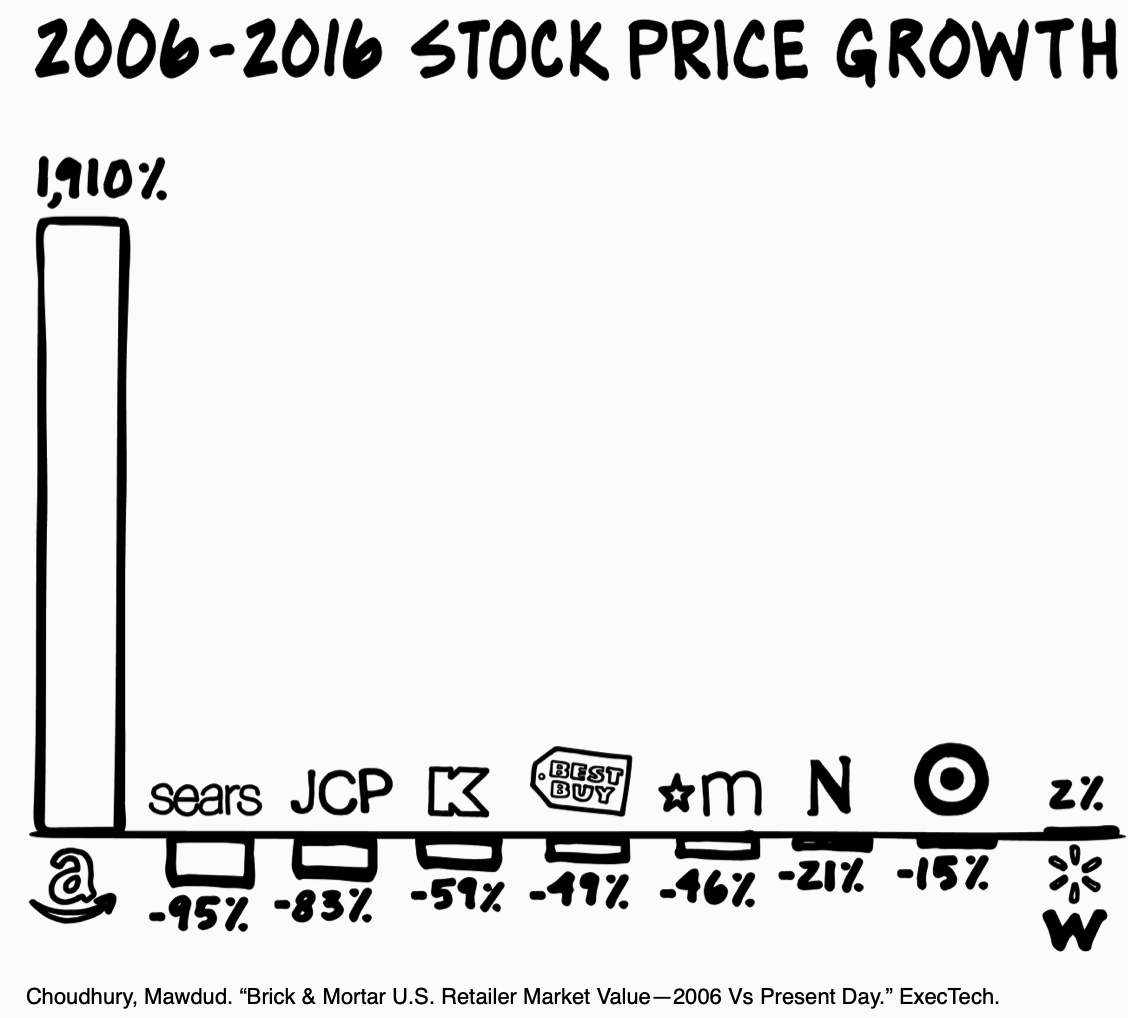
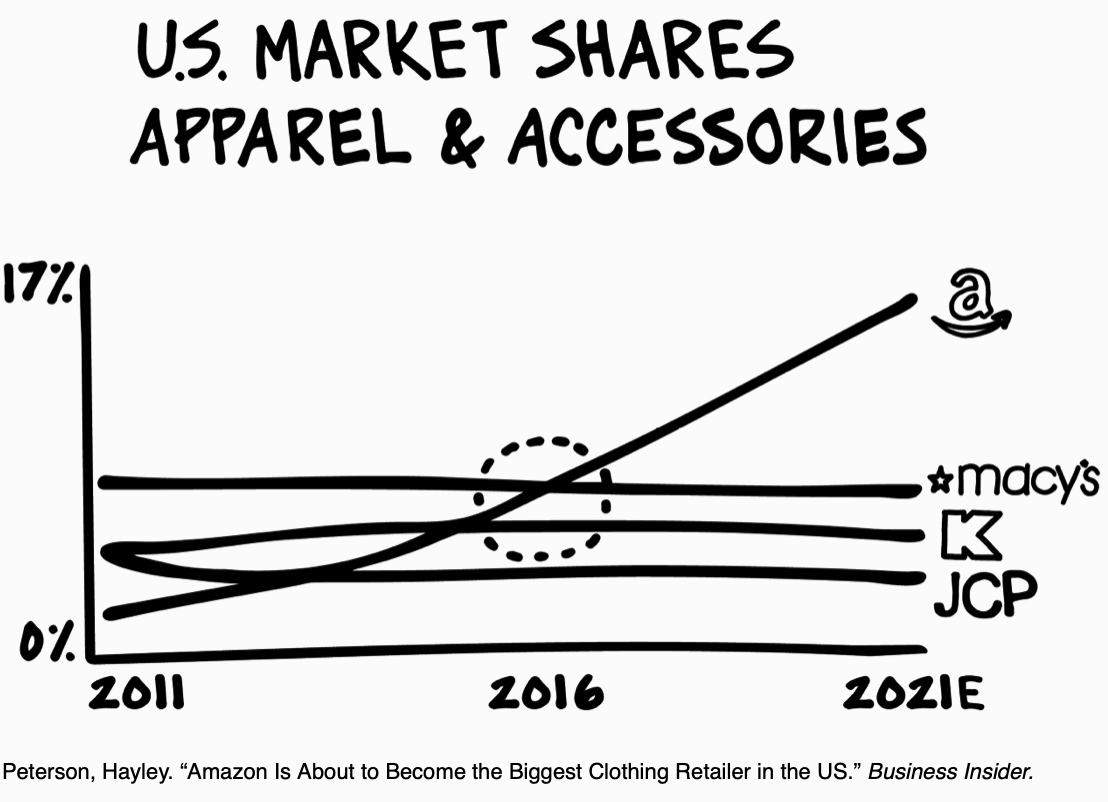
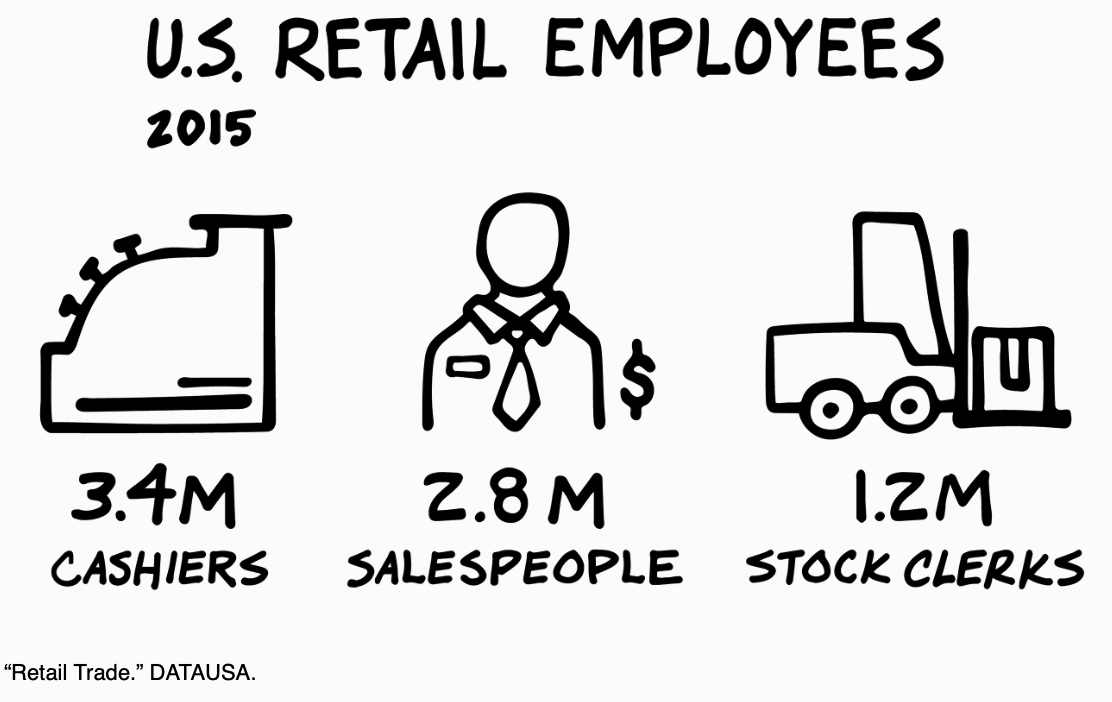
The difference this time is that this value has been created with unprecedented speed by a single company, because, being virtual, Amazon can scale to hundreds of millions of customers, and scale across almost every retail industry, without the traditional drag of having to build brick-and-mortar stores and hire thousands of employees. On Amazon, Bezos realized, every page can be a store and every customer a salesperson. And the company could grow so fast that there wouldn’t be any corners left for competitors to carve out a niche.


Brands are two things: promise and performance. 

Amazon has had more access to cheaper capital for a longer period than any firm in modern times. Most successful VC-backed tech companies in the nineties raised less than $50 million before showing a return to investors. By comparison, Amazon raised $2.1 billion in investors’ money before the company (sort of) broke even. 


Through storytelling, outlining a huge vision, Amazon has reshaped the relationship between company and shareholder. The story is compelling and simple—the power couple of messaging.

  • The Story: Earth’s Biggest Store.

  • The Strategy: Huge investments in consumer benefits that stand the test of time—lower cost, greater selection, and faster delivery.


Most retailers trade at a multiple of profits times eight.46 By comparison, Amazon trades at a multiple of forty. In addition, Amazon has trained the Street to hold them to a different standard—to expect higher growth but lower profits. That enables the company to take the (substantial) incremental gross margin dollars it earns each year and plow more capital back into the business—and avoid that whole tax thing. And that in turn funds the digging of deeper and deeper moats around the business.


Normal business thinking: If we can borrow money at historically low rates, buy back stock, and see the value of management’s options increase, why invest in growth and the jobs that come with it? That’s risky.

Amazon business thinking: If we can borrow money at historically low rates, why don’t we invest that money in extraordinarily expensive control delivery systems? That way we secure an impregnable position in retail and asphyxiate our competitors. Then we can get really big, fast.


Most uber-wealthy people have one thing in common: failure. They’ve experienced it, usually in spades, as the path to wealth is fraught with risks, and often those risks end up being . . . well, risky. A society that encourages you to get up after being beaned in the head, dust off your pants, step back into the batter’s box, and swing harder the next time is the secret sauce for printing billionaires. The correlation is clear. America has the most lenient bankruptcy laws, attracts risk-takers, and, as you might guess, has most of them


These days, it’s easy to forget that Amazon did not turn its first profit until Q4 2001, seven years after its founding,59 and has dipped in and out of profitability ever since. Between drones, 757/767s, tractor-trailers, trans-Pacific shipping, and retired military generals (no joke) who oversaw the world’s most complex logistics operations (try supplying submarines and aircraft carriers that don’t surface or dock more than once every six months), Amazon is building the most robust logistics infrastructure in history. 


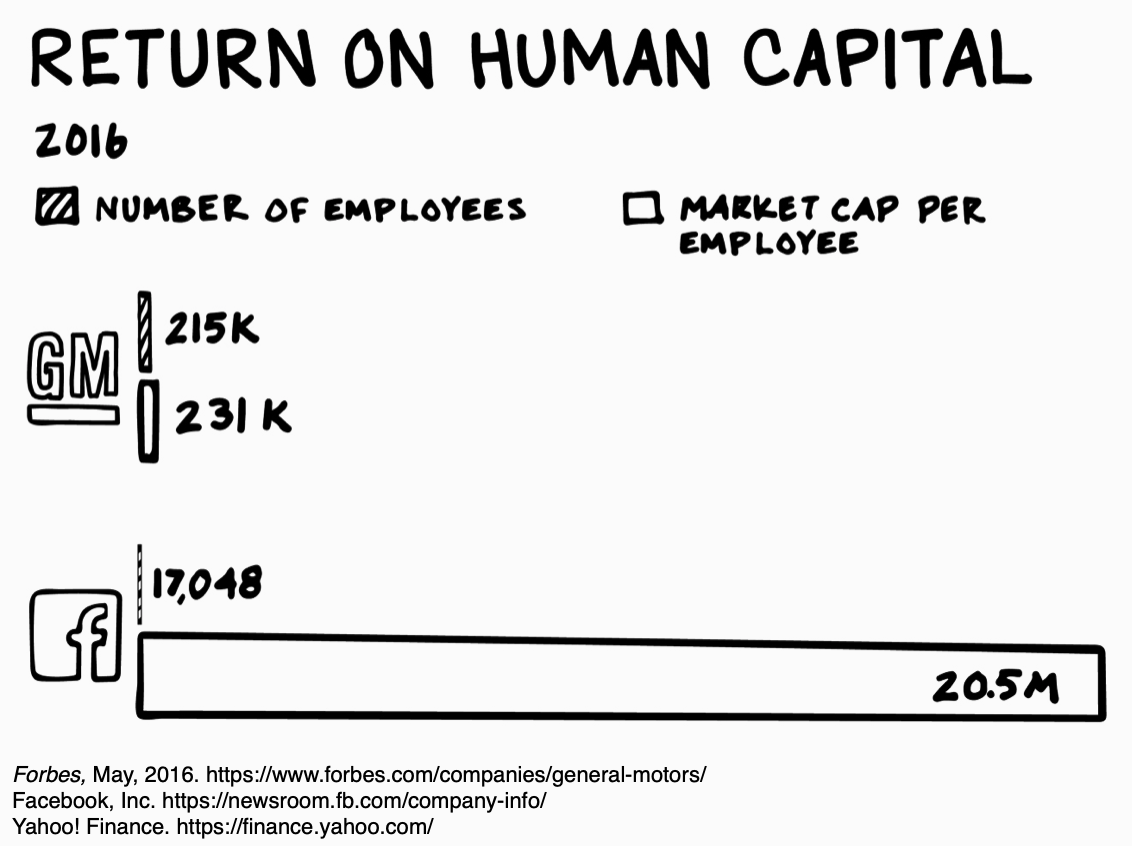
There is a rebel force of innovative retailers out there who are fighting the empire: Sephora, Home Depot, and Best Buy, to name a few. These firms are zigging as Amazon zags and investing in people—beauty associates, blue shirts, geek squads, and gold canvas aprons. They couple this investment in human capital with a deft investment in technology. Consumers no longer go to stores for products, which are easier to get from Amazon. They go to stores for people/experts.


Apple


Apple:

Malcolm Gladwell, the Jesus of business books, highlights the parable of David and Goliath to make the key point: don’t fight on other people’s terms. In other words, once you’ve made the jump to light speed as a tech firm, you need to immunize yourself from the same conquering weapons your army levied on the befuddled prey.


The middle class used to be 61 percent of Americans. Now they are the minority, representing less than half the population . . . the rest being lower or upper income


Facebook

Relationships make us happier. The legendary Grant Study at Harvard Medical School has borne this out. The study found that the depth and meaningfulness of a person’s relationships is the strongest indicator of level of happiness


Churchill said that WWII was won with British brains, American brawn, and Russian blood.


The New York Times, for example, gets about 15 percent of its online traffic from Facebook.29 The Times agreed to let Facebook post its articles natively on the platform. That means you can read the whole article without leaving Facebook and stepping onto the Times’ site. The quid pro quo was that the Times gets to keep the ad revenues. 

Google has become the nerve center of our shared prosthetic brain. If Google represents the brain, Amazon is a link between the brain and our acquisitive fingers—our hunter-gatherer instinct to acquire more stuff. Facebook, by contrast, appeals to our hearts. 


AT SOME POINT, there will be a Fifth Horseman, a company that combines a market valuation of one trillion dollars with sufficient market dominance to define its corner of the world. Or more likely, one of the Four will be replaced. Can we identify companies more likely to join this elite group?


Among the Four, these eight factors are prevalent: product differentiation, visionary capital, global reach, likability, vertical integration, AI, accelerant, and geography. These factors provide an algorithm, rules for what it takes to become a trillion-dollar company. In our work at L2, we use the term T Algorithm to help firms better allocate capital.

Here are the eight factors:


1. Product Differentiation

2. Visionary Capital

3. Global Reach

4. Likability

5. Vertical Integration

6. AI

7. Accelerant

8. Geography


Personal Success Factors


On average, smart people who work hard and treat people well do better than people whose thinking is muddled, who are lazy, or who are unpleasant to colleagues. That has always been and will always be true—even if the occasional jerk proves the exception. However, talent and hard work only get you in the top billion on the planet. There are other, more subtle centrifuges and separators that create the cream of the digital age.


  • Certification - Seek certification

  • The Accomplishment Habit 

Winners, first and foremost, have to be competitors. You cannot win without stepping on the field, and it’s only by taking that risk (you may get beaned in the face), exposing yourself to failure, that real accomplishment is achieved. Competing requires bravery and action-orientation.

  • Get to a City

More than 80 percent of the world’s GDP is generated in cities, and 72 percent of cities outperform their own countries in growth. Every year, a greater percentage of GDP moves to cities, and it will continue to do so. Thirty-six of the hundred largest economies in the world are U.S. metropolitan areas, and in 2012, 92 percent of jobs created and 89 percent of GDP growth came from those same cities.

  • Pimp Your Career

You need a medium to spread your awesomeness, as the path to under-compensation is doing good work that never gets explicitly pimped or attached to you. Yes, it’s unseemly, and your work and achievements should speak for themselves.


  • Boom(er)

  • Equity and the Plan

Nobody becomes super-wealthy through paychecks—it takes equity in growing assets to create real wealth. 


  • Serial Monogamy

The strategy is serial monogamy. Find a good employer where you can learn new skills, garner senior-level sponsorship (somebody who will fight for you), get equity/forced savings, and fully dedicate yourself to that company for three to five years. 


  • Stay Loyal to People, Not Organizations

Be loyal to people. People transcend corporations, and people, unlike corporations, value loyalty. Good leaders know they are only as good as the team standing behind them—and once they have forged a bond of trust with someone, will do whatever it takes to keep that person happy and on their team.


  • Manage Your Career

  • Seeking Justice

  • Regression to the Mean

  • Go Where Your Skill Is Valued

  • Sexy Job vs. ROI

  • Strength

  • Ask for and Give Help

  • What Part of the Alphabet Are You?


January 2, 2021

Alive at Work: The Neuroscience of Helping Your People Love What They Do by Daniel M. Cable

 Alive at Work: The Neuroscience of Helping Your People Love What They Do by Daniel M. Cable


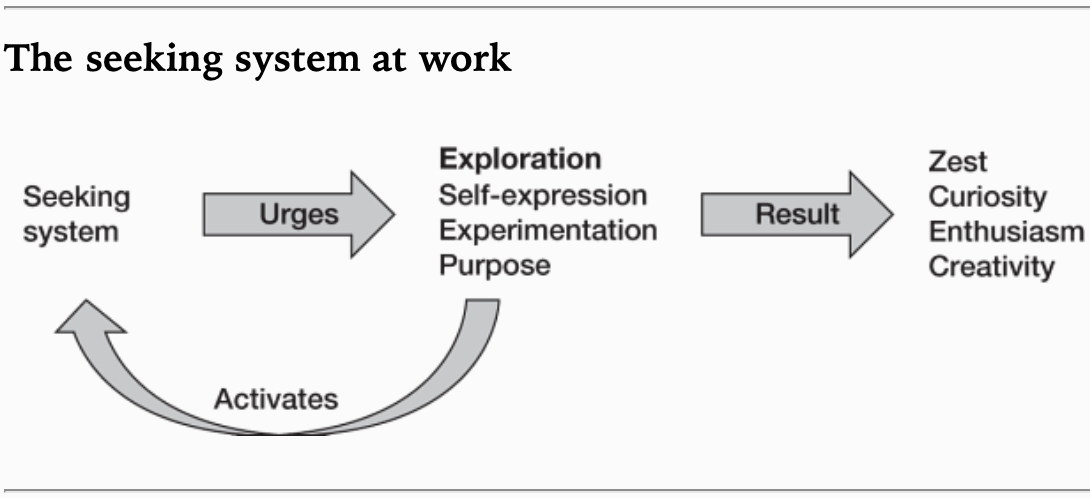
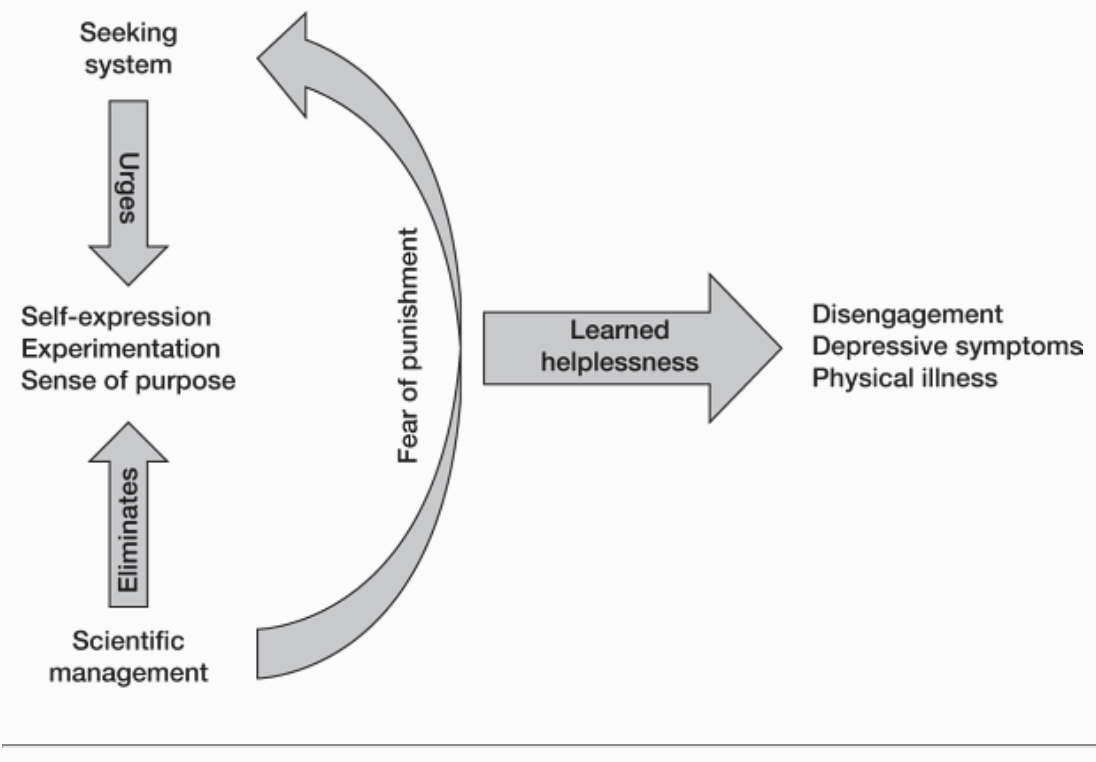
Exploring, experimenting, learning: this is the way we’re designed to live. And work, too. The problem is that our organizations weren’t designed to take advantage of people’s seeking systems. 


When we feel an urge to try new things and learn as much as possible about our environments, our seeking circuits are firing. According to Martin Seligman, a psychologist at the University of Pennsylvania, zest leads people to live life with a sense of excitement, anticipation, and energy.9 When we feel zestful, we see life or work as an adventure. And we approach new situations and changes with enthusiasm and excitement instead of apprehension and anxiety.


Professor Kent Berridge at the University of Michigan, who spent more than twenty years figuring out how the brain experiences a pleasure, concluded that the mammalian brain has separate systems for what he calls wanting and liking.18 Wanting is Berridge’s terminology for the seeking system, whereas the liking system is the brain’s reward center. When we experience the pleasure of a reward, it is the opioid system, rather than the dopamine system, that is being stimulated. These systems lead to very different effects: dopamine has an animating effect; opiates induce a happy stupor


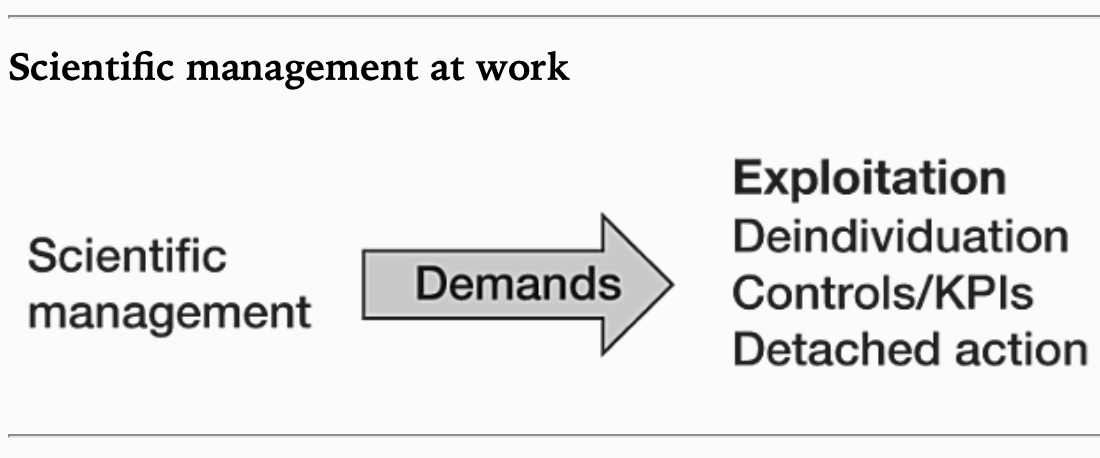
Fine-tuned measurements that are tied to rewards and punishments allow organizations to direct employees and exploit the knowledge and processes that already are known to work. Because fine-tuned control that exploits existing processes makes it hard for workers to explore and experiment with new alternatives. By definition, the outcomes of experimenting and playing are uncertain, distant, and often negative. Biologically, this inhibits our creativity and desire to play. We just don’t ever feel like there is enough time to explore if our behaviors and outcomes are all tightly mapped out in advance, with financial and career implications if we miss them


Fine-tuned measurements that are tied to rewards and punishments allow organizations to direct employees and exploit the knowledge and processes that already are known to work. Because fine-tuned control that exploits existing processes makes it hard for workers to explore and experiment with new alternatives. By definition, the outcomes of experimenting and playing are uncertain, distant, and often negative. Biologically, this inhibits our creativity and desire to play. We just don’t ever feel like there is enough time to explore if our behaviors and outcomes are all tightly mapped out in advance, with financial and career implications if we miss them


In an IBM poll of CEOs worldwide, creativity was identified as the single most important leadership trait for success. So, leaders, these days know they need innovation. But in reality, they punish the behaviors that could lead to experimentation and innovation. By definition, experiments are unpredictable and often do not work to plan (which is, of course, exactly how experiments lead to learning). This is why it is easy for managers to dislike creativity when we are afraid of not hitting monthly revenue or weekly delivery targets


As powerful as self-affirmation and self-expression are in improving our stories about ourselves and changing our behaviors, there’s a way to increase their effects. In a series of studies, Julia Lee, a professor at the University of Michigan, found that those who undergo relational best-self activation experience stronger immune responses, enhanced creative problem solving (over 200 percent improvement), and significantly less anxiety and negative physiological arousal.


Research shows that when people identify and use their unique strengths, they report feeling more alive or intensely alive. Second, if we feel like work is more like real life, complete with intrinsic motivation and positive emotions, we’re more apt to help our organizations adapt, innovate, and stay relevant.


Self-expression organizations activate employees’ seeking systems, resulting in enthusiasm and the intrinsic motivation to invest their best back into the companies

Employers should create best-self reports for employees and for new teams, and then encourage employees to re-craft their jobs so they can play to their strengths. Employers can legitimize self-expressive job titles from the top down, as employees customize their jobs and their job titles from the bottom up. Leaders can encourage teams to openly discuss the unique qualities of each team member, and include members’ perspectives into the group’s decision making. These are evidence-based ways that employees can engage meaningful parts of their self-concepts within the standards of their business environment.


According to affective neuroscientists Jason Wright and Jaak Panksepp, one way to activate people’s seeking systems is to create an experimental safe zone that includes play and supportive social bonding. to get people to change their mindsets and their behaviors, you need to diminish their negative emotions and let them experiment with something new in order to learn some new behaviors.


Experimental safe zones also created intrinsic motivations, which are much more powerful than extrinsic motivations because they unleash creativity. Instead of working hard for fear of losing their jobs (extrinsic), Luigi and his colleagues were fueled by their own enthusiasm and curiosity (intrinsic). This in turn transformed their attitudes about the change.3 Instead of being skeptical—as they were at the beginning—by the end, they were itching to explore and take the experiments farther.  Curiosity is a potent emotion. And when everyone on a team is curious, they are more likely to move away from their comfort zones and old habits and work together in new ways.


Compared with all the other animals, humans are the ones doing all the changes. When you look at our species’ behavior relative to the others, we’re the change animals. This seems to be the outcome when our seeking systems (which other mammals share) teams up with the prefrontal cortex (the new part of our brain that lets us simulate the future, which other mammals don’t share).9 Put these two parts of the brain together, and humans are biologically wired for innovation and change.


Due to the seeking system, the feeling of purpose increases our enthusiasm, intrinsic motivation, and resilience. On average, our ancestors who were good at resisting deception and detecting sincerity in others were probably less likely to get tricked, and more likely to survive and have resources for their children. So it’s pretty likely that we evolved into effective authenticity-detection machines: we are attracted to authenticity and repulsed by insincerity. 


When it comes to the stories we tell ourselves, the why of our behaviors is a more powerful story than the how. Both philosophy and empirical research suggest that the higher our level of interpretation or construal, the more we will stick with it when the going gets hard. When we personally understand and believe in the why of our actions, we have greater resilience and stamina when the going gets tough.


s Friedrich Nietzsche said, “He who has a why to live can bear with almost any how". When we personally understand and believe in the why of our actions, we have greater resilience and stamina when the going gets tough.  If your day starts getting busy with meetings and other demands: it’s painful to try and keep that forty-five minutes open for exercise and a shower. And so when the schedule gets tight, the exercise gets cut. But what happens if your story about exercise is “to make my day better with endorphins”? Endorphins are morphine-like chemicals produced by the body during exercise that trigger positive feelings.


The broader point is to think about how the same behaviors and activities take on very different meanings to us depending on the stories we tell ourselves about what we are doing. If we choose more meaningful stories about our work based on personal experience and interpretations of our impact, we can light up our seeking systems and change our motivation, perseverance, and resilience in the face of adversity.


The purpose experiences described above were successful for a number of reasons: They allowed employees to witness the impact of their jobs firsthand. They also encouraged employees to develop and try out new ideas, which made their work feel more meaningful. As a result, they were able to develop deeper and more personal narratives about why they do what they do.


This is the power of purpose: it activates the seeking system and makes life feel better, as we saw in the company stories recounted throughout this book


January 1, 2021

Factfulness: Ten Reasons We're Wrong About the World and Why Things Are Better Than You Think by Anna Rosling Rönnlund, Hans Rosling, and Ola Rosling

 Factfulness: Ten Reasons We're Wrong About the World and Why Things Are Better Than You Think by Anna Rosling Rönnlund, Hans Rosling, and Ola Rosling


THE GAP INSTINCT


The gap instinct is very strong. I think this is because human beings have a strong dramatic instinct toward binary thinking, a basic urge to divide things into two distinct groups, with nothing but an empty gap in between. We love to dichotomize. Good versus bad. Heroes versus villains. My country versus the rest. Dividing the world into two distinct sides is simple and intuitive, and also dramatic because it implies conflict, and we do it without thinking, all the time.  The gap instinct makes us imagine division where there is just a smooth range, difference where there is convergence, and conflict where there is agreement. It is the first instinct on our list because it’s so common and distorts the data so fundamentally. If you look at the news or click on a lobby group’s website this evening, you will probably notice stories about conflict between two groups, or phrases like “the increasing gap.”


There are three common warning signs that someone might be telling you (or you might be telling yourself) an overdramatic gap story and triggering your gap instinct.

  • comparisons of averages, 

  • comparisons of extremes, and 

  • the view from up here


Factfulness is ... recognizing when a story talks about a gap and remembering that this paints a picture of two separate groups, with a gap in between. The reality is often not polarized at all. Usually, the majority is right there in the middle, where the gap is supposed to be.


To control the gap instinct, look for the majority.

• Beware comparisons of averages. If you could check the spreads you would probably find they overlap. There is probably no gap at all.

• Beware comparisons of extremes. In all groups of countries or people, there are some at the top and some at the bottom. The difference is sometimes extremely unfair. But even then the majority is usually somewhere in between, right where the gap is supposed to be.

• The view from up here. Remember, looking down from above distorts the view. Everything else looks equally short, but it’s not.


THE NEGATIVITY INSTINCT


In large part, it is because of our negativity instinct: our instinct to notice the bad more than the good. There are three things going on here: 

  • the misremembering of the past; 

  • selective reporting by journalists and activists; and 

  • the feeling that as long as things are bad it’s heartless to say they are getting better.


In order for this planet to have financial stability, peace, and protected natural resources, there’s one thing we can’t do without, and that’s an international collaboration, based on a shared and fact-based understanding of the world. The current lack of knowledge about the world is, therefore, the most concerning problem of all. 


What are people really thinking when they say the world is getting worse? My guess is they are not thinking. They are feeling.


How to Control the Negativity Instinct?

  • Bad and Better. A solution that works for me is to persuade myself to keep two thoughts in my head at the same time. It’s both bad and better. Better, and bad, at the same time.


  • Expect Bad News. Something else that helps to control the negativity instinct is to constantly expect bad news remember that the media and activists rely on drama to grab your attention. Remember that negative stories are more dramatic than neutral or positive ones.


  • Don’t Censor History. The evidence about the terrible past is scary, but it is a great resource. It can help us to appreciate what we have today and provide us with the hope that future generations will, as previous generations did, get over the dips and continue the long-term trends toward peace, prosperity, and solutions to our global problems.


Factfulness is ... recognizing when we get negative news, and remembering that information about bad events is much more likely to reach us. When things are getting better we often don’t hear about them. This gives us a systematically too-negative impression of the world around us, which is very stressful. To control the negativity instinct, expect bad news.


• Better and bad. Practice distinguishing between a level (e.g., bad) and a direction of change (e.g., better). Convince yourself that things can be both better and worse.

• Good news is not news. The good news is almost never reported. So the news is almost always bad. When you see bad news, ask whether equally, positive news would have reached you.

• Gradual improvement is not news. When a trend is gradually improving, with periodic dips, you are more likely to notice the dips than the overall improvement.

• More news does not equal more suffering. The more bad news is sometimes due to better surveillance of suffering, not a worsening world.

• Beware of rosy pasts. People often glorify their early experiences, and nations often glorify their histories.


THE STRAIGHT LINE INSTINCT


How to Control the Straight Line Instinct, or Not All Lines Are Straight: is simply to remember that curves naturally come in lots of different shapes. Many aspects of the world are best represented by curves shaped like an S, or a slide, or a hump, and not by a straight line. To understand a phenomenon, we need to make sure we understand the shape of its curve. By assuming we know how a curve continues beyond what we see, we will draw the wrong conclusions and come up with the wrong solutions.


Factfulness is ... recognizing the assumption that a line will just continue straight, and remembering that such lines are rare in reality. 


To control the straight line instinct, remember that curves come in different shapes.


• Don’t assume straight lines. Many trends do not follow straight lines but are S-bends, slides, humps, or double lines. No child ever kept up the rate of growth it achieved in its first six months, and no parents would expect it to.


THE FEAR INSTINCT

When we are afraid, we do not see clearly. Critical thinking is always difficult, but it’s almost impossible when we are scared. There’s no room for facts when our minds are occupied by fear.  Fear can be useful, but only if it is directed at the right things. The fear of instinct is a terrible guide for understanding the world. It makes us give our attention to the unlikely dangers that we are most afraid of, and neglect what is actually most risky.


Because “frightening” and “dangerous” are two different things. Something frightening poses a perceived risk. Something dangerous poses a real risk. Paying too much attention to what is frightening rather than what is dangerous—that is, paying too much attention to fear—creates tragic drainage of energy in the wrong directions.


Factfulness is ... recognizing when frightening things get our attention, and remembering that these are not necessarily the riskiest. Our natural fears of violence, captivity, and contamination make us systematically overestimate these risks.


To control the fear instinct, calculate the risks.

• The scary world: fear vs. reality. The world seems scarier than it is because what you hear about it has been selected—by your own attention filter or by the media—precisely because it is scary.

• Risk = danger × exposure. The risk something poses to you depends not on how scared it makes you feel, but on a combination of two things. How dangerous is it? And how much are you exposed to it?

• Get calm before you carry on. When you are afraid, you see the world differently. Make as few decisions as possible until the panic

has subsided.


THE SIZE INSTINCT

Getting things out of proportion, or misjudging the size of things, is something that we humans do naturally. It is instinctive to look at a lonely number and misjudge its importance. It is also instinctive to misjudge the importance of a single instance or an identifiable victim. These two tendencies are the two key aspects of the size instinct.


The two aspects of the size instinct, together with the negativity instinct, make us systematically underestimate the progress that has been made in the world. At the same time, we systematically overestimate other proportions. 


How to Control the Size Instinct

To avoid getting things out of proportion you need only two magic tools: comparing and dividing.  

  • Compare the Numbers. The most important thing you can do to avoid misjudging something’s importance is to avoid lonely numbers. Never, ever leave a number all by itself. Never believe that one number on its own can be meaningful. If you are offered one number, always ask for at least one more. Something to compare it with. Be especially careful about big numbers. 


  • The 80/20 Rule

  • Divide the Numbers Often the best thing we can do to make a large number more meaningful is to divide it by a total. 

  • Per Person


Factfulness is ... recognizing when a lonely number seems impressive

(small or large), and remember that you could get the opposite impression if it were compared with or divided by some other relevant number.


To control the size instinct, get things in proportion.


• Compare. Big numbers always look big. Single numbers on their own are misleading and should make you suspicious. Always look for comparisons. Ideally, divide by something.

• 80/20. Have you been given a long list? Look for the few largest items and deal with those first. They are quite likely more important than all the others put together. 

• Divide. Amounts and rates can tell very different stories. Rates are more meaningful, especially when comparing between different-sized groups. In particular, look for rates per person when comparing between countries or regions.


THE GENERALIZATION INSTINCT

Everyone automatically categorizes and generalizes all the time. Unconsciously. The necessary and useful instinct to generalize, like all the other instincts in this book, can also distort our worldview. It can make us mistakenly group together things, or people, or countries that are actually very different. It can make us assume everything or everyone in one category is similar. And, maybe most unfortunate of all, it can make us jump to conclusions about a whole category based on a few, or even just one, unusual example.


How to Control the Generalization Instinct

  • Find Better Categories:

  • Question Your Categories

  • Look for Differences Within Groups and Similarities Across Groups

  • Beware of “The Majority”

  • Beware of Exceptional Examples

  • Beware of Generalizing from One Group to Another


Factfulness is ... recognizing when a category is being used in an explanation, and remembering that categories can be misleading. We can’t stop generalization and we shouldn’t even try. What we should try to do is to avoid generalizing incorrectly.


To control the generalization instinct, question your categories.

• Look for differences within groups. Especially when the groups are large, look for ways to split them into smaller, more precise categories. And ...

• Look for similarities across groups. If you find striking similarities between different groups, consider whether your categories are relevant. But also ...

• Look for differences across groups. Do not assume that what applies for one group (e.g., you and other people living on Level 4 or unconscious soldiers) applies for another (e.g., people not living on Level 4 or sleeping babies).

• Beware of “the majority.” The majority just means more than half. Ask whether it means 51 percent, 99 percent, or something in between.

• Beware of vivid examples. Vivid images are easier to recall but they might be the exception rather than the rule.

• Assume people are not idiots. When something looks strange, be curious and humble, and think, In what way is this a smart solution?


THE DESTINY INSTINCT

The destiny instinct is the idea that innate characteristics determine the destinies of people, countries, religions, or cultures. It’s the idea that things are as they are for ineluctable, inescapable reasons: they have always been this way and will never change. This instinct makes us believe that our false generalizations from chapter 6, or the tempting gaps from chapter 1, are not only true but fated: unchanging and unchangeable.  Cultures, nations, religions, and people are not rocks. They are in constant transformation.


How to Control the Destiny Instinct

  • Slow Change Is Not No Change

  • Be Prepared to Update Your Knowledge

  • Talk to Grandpa

  • Collect Examples of Cultural Change


Factfulness is ... recognizing that many things (including people, countries, religions, and cultures) appear to be constant just because the change is happening slowly, and remembering that even small, slow changes gradually add up to big changes.


To control the destiny instinct, remember slow change is still change.

• Keep track of gradual improvements. A small change every year can translate to a huge change over the decades.

• Update your knowledge. Some knowledge goes out of date quickly. Technology, countries, societies, cultures, and religions are constantly changing.

• Talk to Grandpa. If you want to be reminded of how values have changed, think about your grandparents’ values and how they differ from yours.

• Collect examples of cultural change. Challenge the idea that today’s culture must also have been yesterday’s, and will also be tomorrow’s.


THE SINGLE PERSPECTIVE INSTINCT



We find simple ideas very attractive. We enjoy that moment of insight, we enjoy feeling we really understand or know something. And it is easy to take off down a slippery slope, from one attention-grabbing simple idea to a feeling that this idea beautifully explains, or is the beautiful solution for, lots of other things. The world becomes simple. All problems have a single cause —something we must always be completely against. Or all problems have a single solution—something we must always be for. Everything is simple. There’s just one small issue. We completely misunderstand the world. I call this preference for single causes and single solutions the single perspective instinct.


You probably know the saying “give a child a hammer and everything looks like a nail.”


Factfulness is ... recognizing that a single perspective can limit your imagination, and remembering that it is better to look at problems from many angles to get a more accurate understanding and find practical solutions.

To control the single perspective instinct, get a toolbox, not a hammer.


• Test your ideas. Don’t only collect examples that show how excellent your favorite ideas are. Have people who disagree with you test your ideas and find their weaknesses.

• Limited expertise. Don’t claim expertise beyond your field: be humble about what you don’t know. Be aware too of the limits of the expertise of others.

• Hammers and nails. If you are good with a tool, you may want to use it too often. If you have analyzed a problem in-depth, you can end up exaggerating the importance of that problem or of your solution. Remember that no one tool is good for everything. If your favorite idea is a hammer, look for colleagues with screwdrivers, wrenches, and tape measures. Be open to ideas from other fields.

• Numbers, but not only numbers. The world cannot be understood without numbers, and it cannot be understood with numbers alone. Love numbers for what they tell you about real lives.

• Beware of simple ideas and simple solutions. History is full of visionaries who used simple utopian visions to justify terrible actions. Welcome complexity. Combine ideas. Compromise. Solve problems on a case-by-case basis.


THE BLAME INSTINCT

The blame instinct is the instinct to find a clear, simple reason for why something bad has happened. It seems that it comes very naturally for us to decide that when things go wrong, it must be because of some bad individual with bad intentions. We like to believe that things happen because someone wanted them to, that individuals have power and agency: otherwise, the world feels unpredictable, confusing, and frightening.


The blame instinct makes us exaggerate the importance of individuals or of particular groups. This instinct to find a guilty party derails our ability to develop a true, fact-based understanding of the world: it steals our focus as we obsess about someone to blame, then blocks our learning because once we have decided who to punch in the face we stop looking for explanations elsewhere. This undermines our ability to solve the problem or prevent it from happening again because we are stuck with over-simplistic finger-pointing, which distracts us from the more complex truth and prevents us from focusing our energy in the right places.


The blame instinct drives us to attribute more power and influence to individuals than they deserve, for bad or good. Political leaders and CEOs in particular often claim they are more powerful than they are.


Factfulness is ... recognizing when a scapegoat is being used and remembering that blaming an individual often steals the focus from other possible explanations and blocks our ability to prevent similar problems in the future.


To control the blame instinct, resist finding a scapegoat.


• Look for causes, not villains. When something goes wrong don’t look for an individual or a group to blame. Accept that bad things can happen without anyone intending them to. Instead spend your energy on understanding the multiple interacting causes, or systems, that created the situation.


• Look for systems, not heroes. When someone claims to have caused something good, ask whether the outcome might have happened anyway, even if that individual had done nothing. Give the system some credit.


THE URGENCY INSTINCT

When we are afraid and under time pressure and thinking of worst-case scenarios, we tend to make really stupid decisions. Our ability to think analytically can be overwhelmed by an urge to make quick decisions and take immediate action.  It’s almost never that urgent, and it’s almost never an either/or. 


The urgency instinct makes us want to take immediate action in the face of perceived imminent danger. It must have served us, humans, well in the distant past. 


  • Learn to Control the Urgency of Instinct. When people tell me we must act now, it makes me hesitate. In most cases, they are just trying to stop me from thinking clearly.

  • Insist on the Data


Factfulness is ... recognizing when a decision feels urgent and remembering that it rarely is.


To control the urgency instinct, take small steps.


• Take a breath. When your urgency instinct is triggered, your other instincts kick in and your analysis shuts down. Ask for more time and more information. It’s rare now or never and it’s rarely either/or.

• Insist on the data. If something is urgent and important, it should be measured. Beware of data that is relevant but inaccurate, or accurate but irrelevant. Only relevant and accurate data is useful.

• Beware of fortune-tellers. Any prediction about the future is uncertain. Be wary of predictions that fail to acknowledge that. Insist on a full range of scenarios, never just the best or worst case. Ask how often such predictions have been right before.

• Be wary of drastic action. Ask what the side effects will be. Ask how the idea has been tested. Step-by-step practical improvements, and evaluation of their impact, are less dramatic but usually more effective.


FAITHFULNESS IN PRACTICE


How can you use Factfulness in your everyday life: in education, in business, in journalism, in your own organization or community, and as an individual citizen?


We should be teaching our children the basic up-to-date, fact-based framework—life on the four levels and in the four regions—and training them to use Factfulness rules of thumb—the bullet points from the end of each chapter. This would enable them to put the news from around the world in context and spot when the media, activists, or salespeople are triggering their dramatic instincts with overdramatic stories. These skills are part of the critical thinking that is already taught in many schools. They would protect the next generation from a lot of ignorance.

• We should be teaching our children that there are countries on all different levels of health and income and that most are in the middle.

• We should be teaching them about their own country’s socioeconomic position in relation to the rest of the world, and how that is changing.

• We should be teaching them how their own country progressed through the income levels to get to where it is now, and how to use that knowledge to understand what life is like in other countries today.

• We should be teaching them that people are moving up the income levels and most things are improving for them.

• We should be teaching them what life was really like in the past so that they do not mistakenly think that no progress has been made.

• We should be teaching them how to hold the two ideas at the same time: that bad things are going on in the world, but that many things are getting better.

• We should be teaching them that cultural and religious stereotypes are useless for understanding the world.

• We should be teaching them how to consume the news and spot the drama without becoming stressed or hopeless.

• We should be teaching them the common ways that people will try to trick them with numbers.

• We should be teaching them that the world will keep changing and they will have to update their knowledge and worldview throughout their lives.


Most important of all, we should be teaching our children humility and curiosity.


Could everyone have a fact-based worldview one day? A big change is always difficult to imagine. But it is definitely possible, and I think it will happen, for two simple reasons. First: a fact-based worldview is more useful for navigating life, just like an accurate GPS is more useful for finding your way in the city. Second, and probably more important: a fact-based worldview is more comfortable. It creates less stress and hopelessness than the dramatic worldview, simply because the dramatic one is so negative and terrifying.


When we have a fact-based worldview, we can see that the world is not as bad as it seems—and we can see what we have to do to keep making it better.